
Geopolitical concerns, earnings sees investors rush to safe haven plays post the Union Budget presentation in July.

'Market feels this Budget will promote all-round growth and that is what is giving it confidence.'

Market experts on why the bulls will be on the rampage first thing on Monday after the scrapping of enhanced surcharge on FPIs and other measures to ease the systemic liquidity squeeze and boost demand. Prasanna D Zore reports.

"What would be your advice for investors?" 'Keep it simple. Don't panic.'

Quite a few large- and mid-cap stocks are yet to recover from the note ban, pharma, banking and rural demand-based industries among laggards.

The total value of holdings of domestic institutional investors as a percentage of the value of FII holdings has reached its highest level in four years.

'The market position from here on is expected to go up'.

Hindustan Zinc (HZL), a subsidiary of Vedanta, announced an interim dividend of Rs 21 per share last week, resulting in an outflow of Rs 8,863 crore. The announcement has turned the spotlight on India Inc's dividend-paying policy - more so for reasons driving the generosity of firms. An analysis of BSE 500 companies by Business Standard Research Bureau shows that some of the top 20 dividend-paying companies in 2021-22 (FY22) include Vedanta, Tata Consultancy Services, HZL, Oil and Natural Gas Corporation (ONGC), Indian Oil Corporation (IndianOil), Hindustan Unilever (HUL), Reliance Industries (RIL), and Bajaj Auto, among others.

The India growth story is still intact, and fall in the Indian stock markets is an imported one and if the government succeeds in legislating the GST and Land Bill, India could yet emerge as a winner believe stock market experts

This year is set to be the third consecutive year when India's share of IPOs has fallen relative to the rest of the world.

'It is only fear and speculation, without much substance, that has led to the fall.'

Laggards yet, a number of smaller PSBs in the category have balance sheets which do not give much comfort.
Laggards yet, a number of smaller PSBs in the category have balance sheets which do not give much comfort.
The management, however, is a bit wary about near-term performance.
Faster account opening, which allows investors to start trading without ever leaving their homes or visiting a physical branch of their local brokerage has played a role in the surge.

Of these, three stocks belong to the automobile pack and two are from the pharma.

They have put in $14 billion so far in 2014 but this could get slower if the US Fed raises rates; however, there are expectations on compensatory flows.

The sentiment around Indian equities remains positive and unchanged.

There cannot be value in every stock, whether large cap or otherwise. Thus buying a stock cheap does not always translate into value buying

The spread of COVID-19 and the accompanying mayhem caused the S&P BSE Sensex to drop over 38.5 per cent from its all-time high of 42,273.9 to a low of 25,981.2 on March 23. Those in the astrology and even numerology segments received more calls than before during the time.

Analysts expect the indices to dip further if the global macros do not stabilise
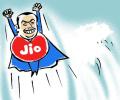
Given the fragmented nature of the domestic cable TV market and the need for last-mile connectivity, RIL, said sources, would have to do more to achieve its target of reaching 20 million homes and 15 million business establishments with its broadband services across 1,600 towns in the next few years.
The Reserve Bank of India held its policy rate at 7.25 percent on Tuesday.

Sensex ends belowe 26,800 on domestic concerns.

Trading in Samvat 2074 on Thursday got off to a rocky start, with the benchmark indices ending more than half a percent lower and the gauge for banking stocks dropping 1.25%.

'Policy was more in line with the expectations.'

Pressure on the government increased with the Reserve Bank of India's surprise move on Thursday to cut interest rates

Deven Choksey, managing director of broking firm, K R Choksey Investment Managers shares his concern about 'trading stoppages' with Rediff.com's Prasanna D Zore.

Thirteen companies have joined the Rs 1-trillion-plus market capitalisation club this year, so far. This even as the benchmark Sensex has gained less than 3 per cent on a year-to-date basis, underscoring the bullish undercurrent in the broader market. The trend shows a harsh second wave of Covid-19, subsequent lockdowns, and hit to the economic activity has made little dent into India Inc or shareholders' wealth. At the start of the year, there were 29 companies with a market value of more than Rs 1 trillion.

This weakness is likely to continue in the near-term.

India on track to be third largest consumer economy by 2025.

'Wherever the businesses are not up to the size of the Tata group, Cyrus Mistry initiated actions to move out of those businesses.'

Promoters of 517 companies have pledged nearly 46.35 per cent of their shares, the highest since the 2008 global financial crisis.

Most Asian markets were trading weak on Monday.

Capital Goods shares ended mixed on the back of weak IIP numbers. L&T ended down 0.7% while BHEL ended with marginal gains.

Telecom shares rallied on hopes that they would hike tariffs after huge investments to acquire spectrum.

The 30-share Sensex ended down 604 points at 28,845 and the 50-share Nifty ended down 181 points at 8,757. The Bank Nifty ended down 602 points at 19,146.

The outcome is beyond the market's expectation and will be a sentimental boost, say analysts.
Kotak Mahindra Bank and Vedanta were the top Nifty gainers.

Hike in planned public-sector capital expenditure will be credit-positive for infra cos
